Overview#
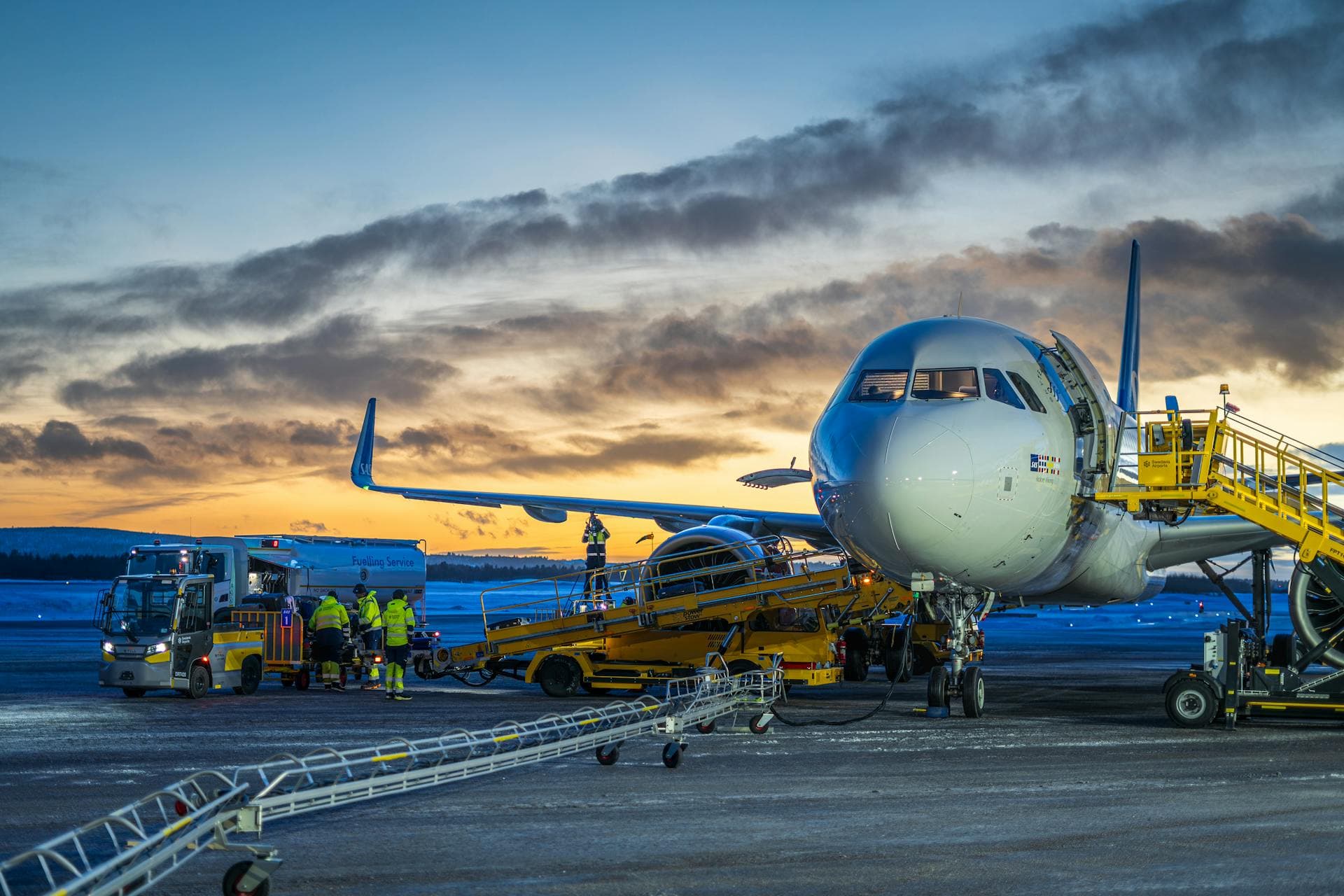
Airport ground operations include all activities that occur between an aircraft's arrival at the gate and its departure on the next flight. These processes involve coordinated work between airlines, airport authorities, ground handling companies, security agencies, and air traffic control.
Efficient ground operations are essential for:
- on-time performance
- aircraft utilization
- passenger flow
- safety and regulatory compliance
This directory maps the major operational processes that occur during aircraft turnaround and airport operations.
Start here → How Airlines and Airports Work explains the overall aviation system. Then read Airport Operations 101 for a deeper look at airport infrastructure and procedures.
Aircraft Turnaround Sequence#
A typical turnaround involves multiple parallel activities that prepare the aircraft for its next departure.
| Step | Typical Time | Key Dependencies |
|---|---|---|
| Arrival & docking | 0 min | Gate availability |
| Deplaning | 0–10 min | Jet bridge / stairs |
| Cabin cleaning | 5–20 min | Cleaning crew |
| Catering | 10–25 min | Galley access |
| Fueling | 10–30 min | Fuel truck / hydrant |
| Baggage unload/load | 10–30 min | baggage handling system |
| Boarding | 15–30 min | Gate agents |
| Pushback | Final step | ATC clearance |
Low-cost carriers often target 25–35 minute turnarounds, while full-service carriers may require 45–60+ minutes depending on aircraft size and service complexity.
Baggage Handling#
Airport baggage systems move luggage from check-in to the aircraft and back again after arrival.
| Stage | Process | Technology |
|---|---|---|
| Check-in | Bag tagged and enters system | Barcode / RFID |
| Screening | Security scanning | X-ray / CT scanners |
| Sorting | Routed to correct flight | Conveyor / tilt-tray |
| Loading | Baggage loaded to aircraft | Belt loaders or ULD containers |
| Reconciliation | Bag matched to passenger | Security requirement |
| Arrival | Bags unloaded and routed | Carousel / transfer |
Key guide:
Baggage Handling
Security Screening#
Airport security protects passengers, aircraft, and infrastructure from threats.
| Checkpoint | What’s Screened | Authority |
|---|---|---|
| Passenger screening | People and carry-on bags | National aviation security agencies |
| Checked baggage | Hold luggage | Automated + manual inspection |
| Cargo | Freight and mail | Certified cargo operators |
| Staff / vehicles | Access to restricted areas | ID badge + screening |
Key guide:
How Airport Security Works
Airside Infrastructure#
Airside areas support aircraft movement and servicing.
| Element | Purpose |
|---|---|
| Runway | Aircraft takeoff and landing |
| Taxiway | Connects runways and gates |
| Apron / ramp | Aircraft parking and servicing |
| Gate | Passenger boarding location |
| Hold-short line | Safety stop before runway entry |
These areas are restricted to authorized personnel and vehicles.
Deicing Operations#
In cold-weather environments, aircraft must be treated before departure when aircraft icing conditions exist.
Typical process:
- Type I fluid — heated glycol mixture that removes existing ice or frost
- Type IV fluid — thicker anti-icing layer that prevents re-accumulation
- Holdover time — the time window before protection expires
Deicing operations can add 10–30+ minutes to departure times and are a major contributor to winter delays.
Key guide:
Aircraft Icing Explained
Slots & Scheduling#
At heavily congested airports, slot systems regulate arrivals and departures.
Slot systems affect:
Operational performance is tracked using on-time performance metrics measured from gate departure to gate arrival.
Safety Systems#
Airport operations rely on multiple safety frameworks.
- SMS — Safety Management Systems mandated by ICAO
- Foreign Object Debris (FOD) inspections — prevent runway hazards and engine ingestion
- TCAS and ground radar — help prevent runway incursions and airspace conflicts
Related Guides#
- Airport Operations 101
- How Airlines and Airports Work
- How Baggage Handling Works
- How Airport Security Works
- Aircraft Icing Explained
- Flight Delays & Cancellations Explained
- Runway Visual Range (RVR)