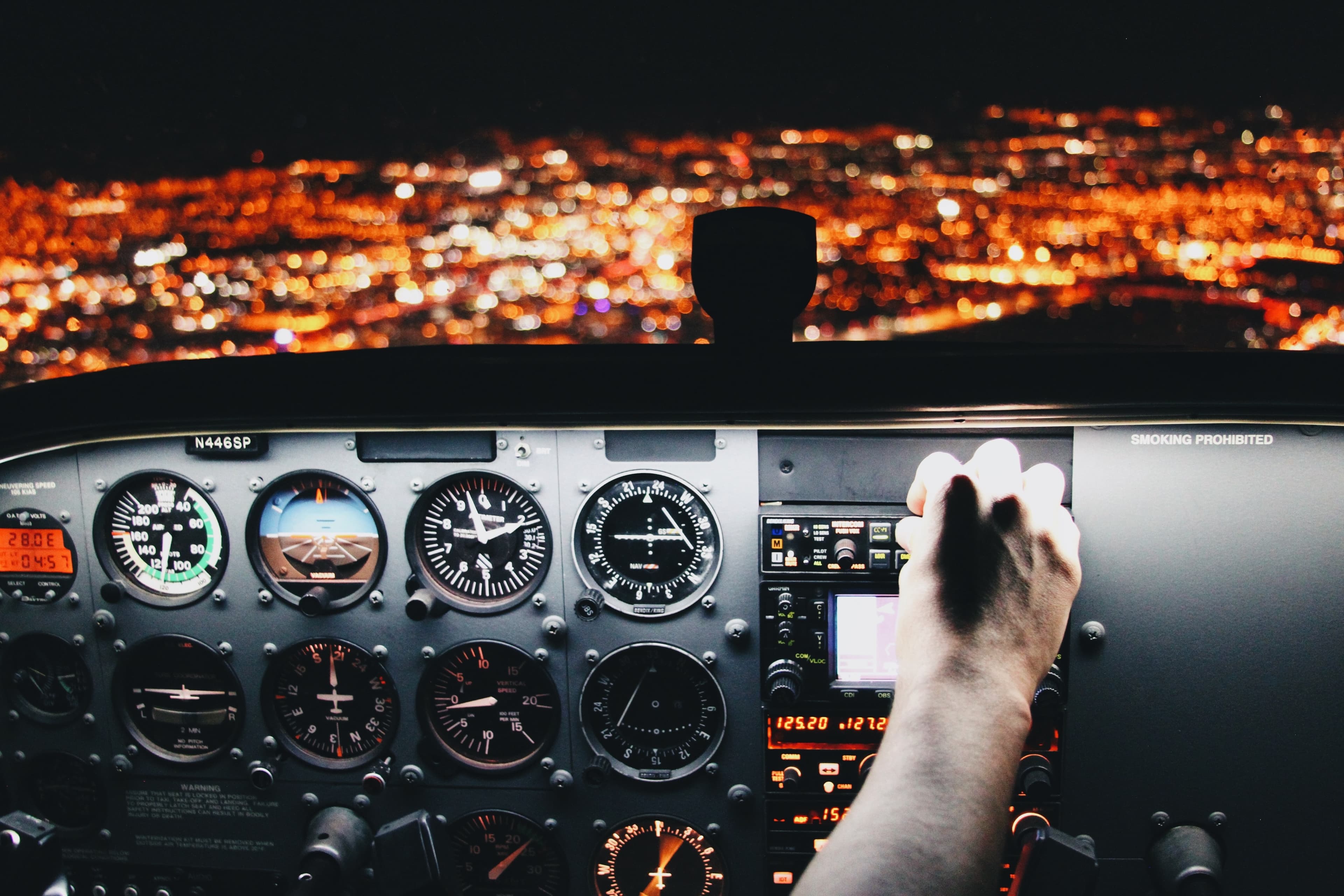
Aircraft Systems
Onboard mechanical, electrical, hydraulic, pressurization, and structural systems that enable safe aircraft operation.
Modern aircraft rely on dozens of interconnected systems to maintain safe, controlled flight. Beyond the engines and control surfaces, an aircraft's structural and environmental systems play a critical role in protecting passengers and enabling operations at altitude.
The guides here explore the onboard systems that support flight operations: cabin pressurization, bleed air, structural design decisions, hydraulic architecture, electrical systems, de-icing, and flight instruments. Each one examines how a specific system works and why it matters.
Understanding aircraft systems gives pilots and aviation professionals the knowledge to recognize normal operation, identify anomalies, and make informed decisions when systems behave unexpectedly.
Guides in this topic
3 guides

How Jet Engines Work (Turbofan vs Turboprop)
How turbofan and turboprop engines work: compressors, combustion, turbines, bypass flow, propellers, reduction gearboxes, bypass ratio, efficiency, and why different aircraft use each design.
Read guide →

Why Airplane Windows Are Rounded
Learn why airplane windows use rounded corners, how cabin differential pressure creates stress around fuselage cutouts, what the de Havilland Comet taught aviation about fatigue, and how modern multi-pane windows remain safe.
Read guide →

Cabin Pressurization Explained
Learn how aircraft cabin pressurization works: cabin altitude, differential pressure, bleed air and electric compressors, outflow and relief valves, oxygen systems, decompression, and the Boeing 787.
Read guide →
Learning paths
Curated reading orders that include guides from this topic.

Key terminology
Essential glossary terms associated with this topic.
- AileronTopic: Aircraft PerformanceAilerons are movable control surfaces on aircraft wings that control roll. The pilot deflects them to bank the aircraft left or right, with each aileron moving in the opposite direction to create differential lift.
- Air MassTopic: Flight Controls & StabilityA large body of air with roughly uniform temperature and humidity that forms when air stagnates over a region long enough to adopt that area's surface characteristics.
- Aircraft EngineeringTopic: Aircraft SystemsAircraft engineering is the discipline of designing, building, and maintaining aircraft by integrating aerodynamics, structures, materials, and systems to meet safety and regulatory standards.
- AirspeedTopic: AerodynamicsAirspeed is the speed of an aircraft relative to the surrounding air mass. It is measured by a pitot-static system and serves as the primary reference for aircraft performance, control, and safety.
- Bleed AirTopic: Aircraft SystemsBleed air is hot, high-pressure air extracted from a jet engine's compressor and routed to aircraft systems like cabin pressurization, air conditioning, and anti-ice protection.
- Bypass RatioTopic: Aircraft SystemsThe ratio of air bypassing a jet engine's core to air passing through it. Higher bypass ratios produce quieter, more fuel-efficient engines typical of commercial aircraft.
- Cabin AltitudeTopic: Aircraft SystemsCabin altitude is the air pressure inside an aircraft cabin expressed as an equivalent altitude in feet above sea level. It is maintained between 6,000 and 8,000 feet on most commercial flights to keep passengers and crew safe and comfortable at...
- Cabin PressureTopic: Aircraft SystemsThe air pressure maintained inside an aircraft's sealed cabin, kept artificially high through compressed air systems so occupants can breathe safely at high cruising altitudes.
- Cabin PressurizationTopic: AerodynamicsCabin pressurization is the process of maintaining safe, breathable air pressure inside an aircraft cabin during high-altitude flight, where outside air is too thin to sustain human life.
- CG EnvelopeTopic: Aircraft PerformanceThe CG envelope defines the forward and aft limits within which an aircraft's center of gravity must remain during all phases of flight for safe and legal operation.
- Clear Air TurbulenceTopic: Aviation WeatherClear air turbulence (CAT) is sudden, invisible turbulence that occurs in cloudless sky, typically near the jet stream at high altitudes where wind shear creates unstable air motion.
- Combustion ChamberTopic: Aircraft SystemsThe combustion chamber is the section of a gas turbine engine where compressed air and fuel mix and burn to produce the hot, high-pressure gases that drive the turbine and generate thrust.
Continue exploring
Browse the full guide library or other topic hubs.