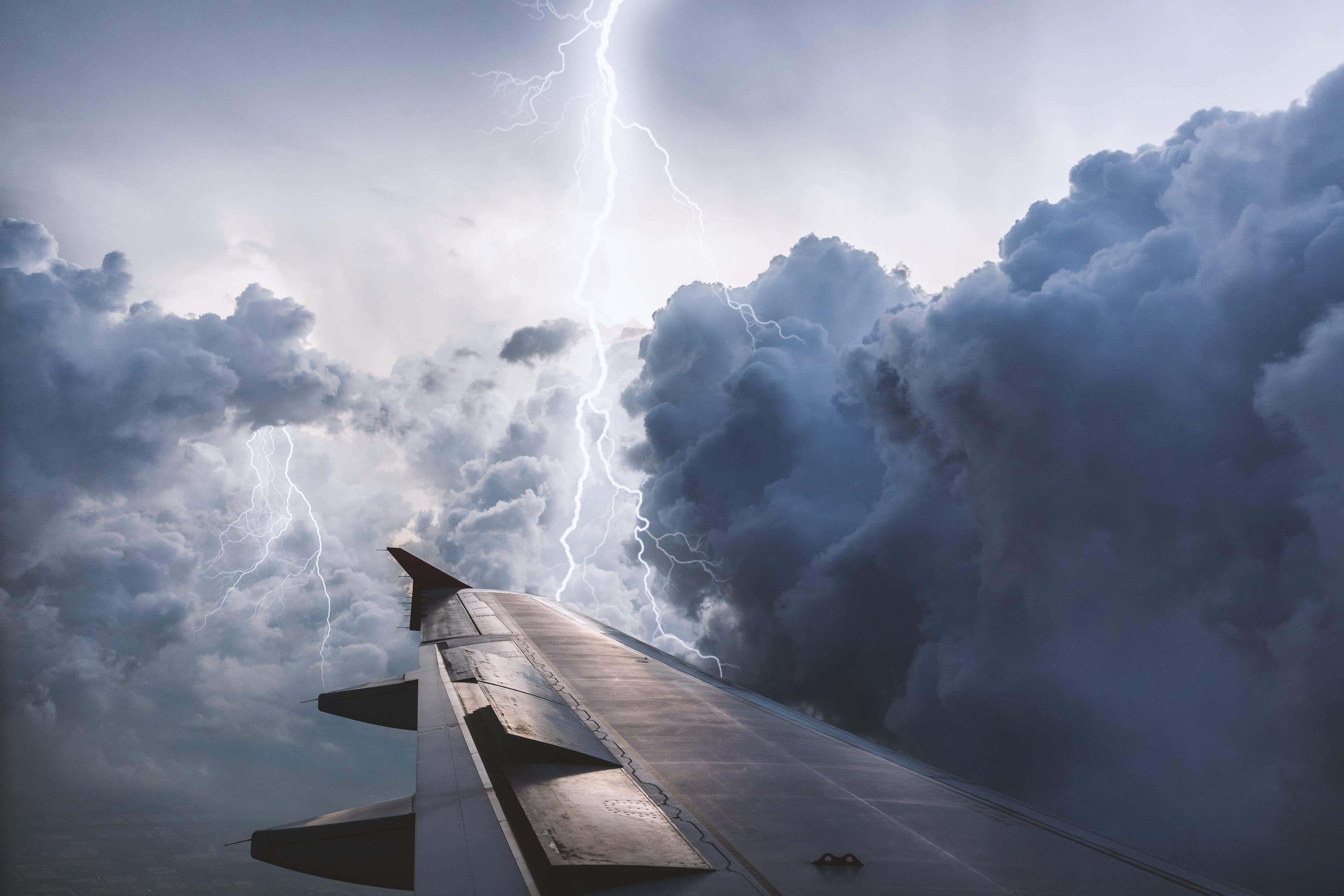
Aviation Weather
Weather systems, atmospheric behavior, and hazardous phenomena that affect flight safety and planning.
Weather is one of the most significant variables in aviation safety. Understanding atmospheric behavior (how fronts move, why turbulence forms, where icing occurs) is essential for every pilot and dispatcher.
The guides here cover the atmospheric phenomena and weather hazards that directly affect flight: air masses and fronts, turbulence types (including clear-air turbulence), aircraft icing conditions, wind shear, thunderstorm hazards, and the broader weather systems that drive them.
The focus is on understanding weather as a physical system. For interpreting coded weather reports (METARs, TAFs, RVR), see the Weather Reporting & Products topic.
Recommended starting point
Start here
A beginner-friendly guide to orient you in this subject area.

Guides in this topic
4 guides

What Is Turbulence?
Aircraft turbulence explained: what causes rough air, CAT, convection, mountain waves and wake turbulence, FAA intensity levels, flight effects, forecasting, and why seat belts matter.
Read guide →

Clear Air Turbulence Explained
Clear-air turbulence explained: how wind shear and atmospheric instability create CAT, how GTG, EDR and PIREPs forecast it, how crews respond, and what climate research shows.
Read guide →

Air Masses & Fronts in Aviation
Air masses and fronts explained: cP, mT, cold, warm, stationary and occluded fronts, aviation hazards, chart symbols, METAR and TAF clues, and flight planning.
Read guide →

Aircraft Icing Explained
Aircraft icing explained: supercooled water droplets, rime and clear ice, SLD, aerodynamic effects, stall risk, ice-protection systems, forecasts, certification, and escape planning.
Read guide →
Learning paths
Curated reading orders that include guides from this topic.
Aviation Weather Fundamentals
Master aviation weather basics, from air masses and fronts to METARs, TAFs, and runway visibility, so pilot decisions start with clear conditions.
View learning path →
Aviation Weather Hazards
Understand the weather hazards pilots plan around, including turbulence, clear air turbulence, aircraft icing, and crosswinds during takeoff and landing.
View learning path →


Key terminology
Essential glossary terms associated with this topic.
- AileronTopic: Aircraft PerformanceAilerons are movable control surfaces on aircraft wings that control roll. The pilot deflects them to bank the aircraft left or right, with each aileron moving in the opposite direction to create differential lift.
- Air MassTopic: Flight Controls & StabilityA large body of air with roughly uniform temperature and humidity that forms when air stagnates over a region long enough to adopt that area's surface characteristics.
- Air Traffic ControlTopic: Airline Operations & EconomicsAir Traffic Control (ATC) is a ground-based service that directs aircraft movement and maintains safe separation in the air and on airport surfaces through radar, radio communication, and standardized procedures.
- AirfoilTopic: AerodynamicsAn airfoil is any surface shaped to generate lift when air flows over it. Wings, propeller blades, and rotor blades are common airfoils used in aircraft.
- Airline AllianceTopic: AerodynamicsA formal agreement between two or more airlines to coordinate operations, share routes, and link frequent flyer programs, allowing passengers to earn and redeem miles across all partner carriers on a single journey.
- AIRMETTopic: Weather Reporting & ProductsAn aviation weather advisory issued by the National Weather Service warning pilots of moderate weather hazards such as turbulence, icing, and instrument flight conditions that may affect general aviation operations.
- AirspeedTopic: AerodynamicsAirspeed is the speed of an aircraft relative to the surrounding air mass. It is measured by a pitot-static system and serves as the primary reference for aircraft performance, control, and safety.
- Altimeter SettingTopic: Aircraft PerformanceThe barometric pressure value a pilot sets in an altimeter to correct for local atmospheric conditions and ensure accurate altitude readings above mean sea level.
- Anti-Ice SystemsTopic: Aviation WeatherAnti-ice systems prevent ice formation on critical aircraft surfaces by maintaining heat through bleed air, electrical elements, or glycol fluid, working proactively before ice can accumulate.
- ATCTopic: Aircraft PerformanceAir Traffic Control (ATC) is the ground-based service that guides and separates aircraft in the air and on the ground to maintain safety and efficiency in controlled airspace.
- Bleed AirTopic: Aircraft SystemsBleed air is hot, high-pressure air extracted from a jet engine's compressor and routed to aircraft systems like cabin pressurization, air conditioning, and anti-ice protection.
- Cabin PressurizationTopic: AerodynamicsCabin pressurization is the process of maintaining safe, breathable air pressure inside an aircraft cabin during high-altitude flight, where outside air is too thin to sustain human life.
Reference directories
Curated reference lists and structured data for this topic.

METAR & TAF codes
Search common weather, cloud, visibility, and forecast codes used in METAR, SPECI, and TAF reports.
Continue exploring
Browse the full guide library or other topic hubs.