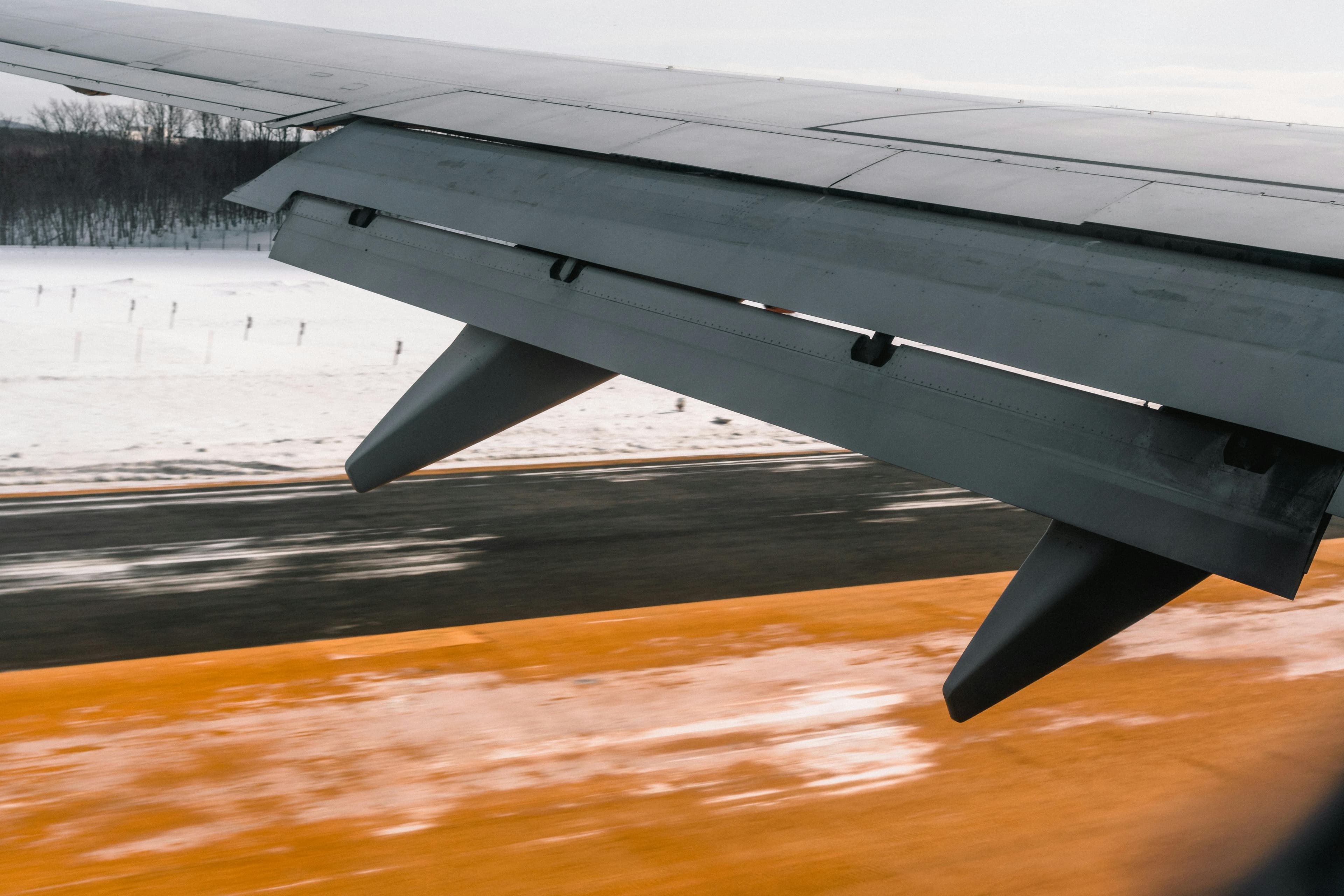
Flight Controls & Stability
How aircraft are controlled and stabilized in flight: control surfaces, trim, autopilot, and stability characteristics.
Flight control systems are the interface between pilot intent and aircraft response. Every turn, climb, descent, and speed change depends on the coordinated movement of control surfaces that redirect airflow to produce the desired forces.
The guides here cover primary control surfaces (ailerons, elevators, and rudder) as well as secondary controls like trim tabs, autopilot systems, and fly-by-wire architectures. Each one explains how specific control mechanisms work and their role in different phases of flight.
Stability characteristics (how an aircraft naturally returns to equilibrium in roll, pitch, and yaw) are also covered here, providing a complete picture of how aircraft are controlled and how they respond without pilot input.
Guides in this topic
1 guide

Learning paths
Curated reading orders that include guides from this topic.

Key terminology
Essential glossary terms associated with this topic.
- Adverse YawTopic: Flight Controls & StabilityAdverse yaw is an undesired rotation of the aircraft's nose away from the intended turn direction, caused by the drag imbalance created when ailerons deflect during a turn.
- AileronTopic: Aircraft PerformanceAilerons are movable control surfaces on aircraft wings that control roll. The pilot deflects them to bank the aircraft left or right, with each aileron moving in the opposite direction to create differential lift.
- Air MassTopic: Flight Controls & StabilityA large body of air with roughly uniform temperature and humidity that forms when air stagnates over a region long enough to adopt that area's surface characteristics.
- Aircraft Control SurfaceTopic: Flight Controls & StabilityA control surface is a movable panel on an aircraft's wings or tail that deflects into the airflow to change aerodynamic forces and control the aircraft's attitude, roll, pitch, or yaw.
- AirspeedTopic: AerodynamicsAirspeed is the speed of an aircraft relative to the surrounding air mass. It is measured by a pitot-static system and serves as the primary reference for aircraft performance, control, and safety.
- Angle of AttackTopic: AerodynamicsThe angle of attack is the angle between a wing's chord line and the oncoming airflow. It determines how much lift a wing generates and is critical to understanding stalls.
- Bank AngleTopic: Flight Controls & StabilityBank angle is the angle between an aircraft's wings and the horizontal horizon during a turn. It controls turn rate and load factor, with greater angles producing tighter turns and higher g-forces.
- Bernoulli's PrincipleTopic: AerodynamicsBernoulli's Principle states that as the speed of a fluid increases, its pressure decreases. In aviation, this relationship explains how wings generate lift by accelerating airflow over a curved upper surface.
- CamberTopic: Flight Controls & StabilityCamber is the curvature of an airfoil's surface from leading edge to trailing edge. Greater camber produces more lift at a given airspeed, and can be increased in flight by extending flaps.
- Center of GravityTopic: Aircraft PerformanceThe center of gravity (CG) is the single point where an aircraft's total weight acts downward. It shifts with loading changes and must remain within the manufacturer's approved envelope for safe flight.
- Coordinated FlightTopic: Flight Controls & StabilityCoordinated flight is the condition in which an aircraft moves cleanly through the air with balanced inputs to all three primary controls, keeping the slip/skid indicator centered and preventing sideways drift.
- Critical Angle of AttackTopic: AerodynamicsThe critical angle of attack is the maximum angle between a wing's chord line and oncoming airflow before the wing stalls. Beyond this point, smooth airflow separates from the upper surface and lift collapses.
Continue exploring
Browse the full guide library or other topic hubs.