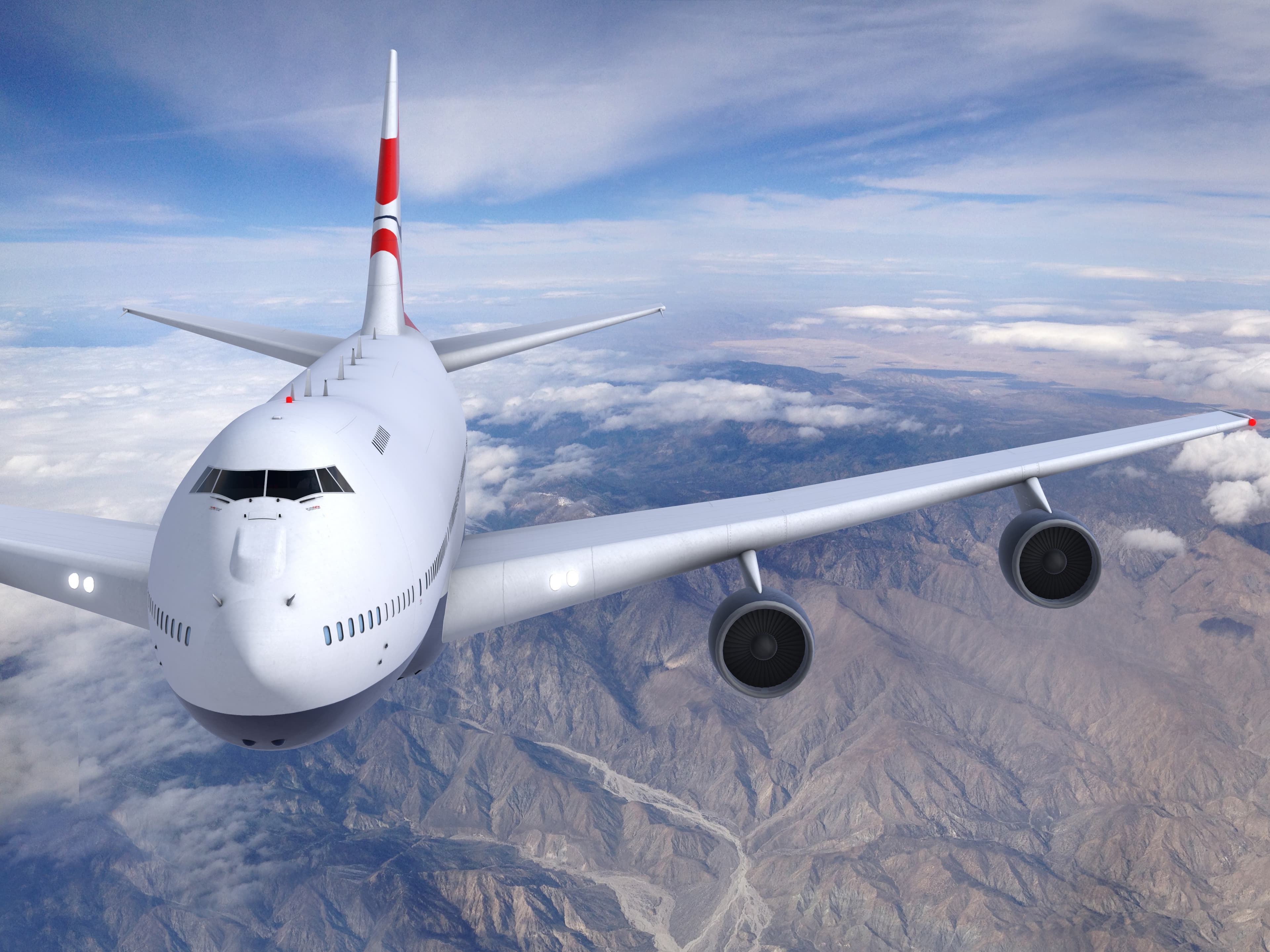
Aerodynamics
The physics of flight: lift, drag, airflow behavior, stall characteristics, and the aerodynamic principles behind aircraft design.
Aerodynamics is the foundational science of flight. Every aircraft design decision, from wing shape to control surface geometry, traces back to how air behaves as it flows over and around solid structures in motion.
The guides here cover the core aerodynamic forces and phenomena: how lift is generated, the difference between induced and parasite drag, how and why stalls occur, and the principles that link airspeed, angle of attack, and flight performance.
For student pilots and anyone studying aerospace engineering fundamentals, this collection builds a rigorous understanding of the physical forces that make controlled flight possible.
Recommended starting point
Start here
A beginner-friendly guide to orient you in this subject area.

Guides in this topic
2 guides

Induced vs Parasite Drag
Induced vs parasite drag explained: why drag rises at low and high airspeed, how the drag curve and L/D max work, and what they mean for glide, climb, cruise, and the power curve.
Read guide →

What Is a Stall?
Aircraft stalls explained: critical angle of attack, airflow separation, changing stall speed, accelerated stalls, warning signs, spin risk, prevention, and recovery principles.
Read guide →
Learning paths
Curated reading orders that include guides from this topic.

Key terminology
Essential glossary terms associated with this topic.
- Adverse YawTopic: Flight Controls & StabilityAdverse yaw is an undesired rotation of the aircraft's nose away from the intended turn direction, caused by the drag imbalance created when ailerons deflect during a turn.
- Aerodynamic StallTopic: AerodynamicsAn aerodynamic stall occurs when a wing's angle of attack exceeds its critical value, causing airflow to separate from the upper surface and lift to drop sharply. It can happen at any speed and in any aircraft attitude.
- AileronTopic: Aircraft PerformanceAilerons are movable control surfaces on aircraft wings that control roll. The pilot deflects them to bank the aircraft left or right, with each aileron moving in the opposite direction to create differential lift.
- Air MassTopic: Flight Controls & StabilityA large body of air with roughly uniform temperature and humidity that forms when air stagnates over a region long enough to adopt that area's surface characteristics.
- Air Traffic ControlTopic: Airline Operations & EconomicsAir Traffic Control (ATC) is a ground-based service that directs aircraft movement and maintains safe separation in the air and on airport surfaces through radar, radio communication, and standardized procedures.
- Airflow SeparationTopic: AerodynamicsAirflow separation is the detachment of smooth air from a wing's surface, causing flow to become turbulent. It occurs when the angle of attack exceeds the wing's capability to maintain attached flow, resulting in a stall.
- AirfoilTopic: AerodynamicsAn airfoil is any surface shaped to generate lift when air flows over it. Wings, propeller blades, and rotor blades are common airfoils used in aircraft.
- Airline AllianceTopic: AerodynamicsA formal agreement between two or more airlines to coordinate operations, share routes, and link frequent flyer programs, allowing passengers to earn and redeem miles across all partner carriers on a single journey.
- AirspeedTopic: AerodynamicsAirspeed is the speed of an aircraft relative to the surrounding air mass. It is measured by a pitot-static system and serves as the primary reference for aircraft performance, control, and safety.
- Angle of AttackTopic: AerodynamicsThe angle of attack is the angle between a wing's chord line and the oncoming airflow. It determines how much lift a wing generates and is critical to understanding stalls.
- Back Side of the Power CurveTopic: AerodynamicsA flight regime below an aircraft's most efficient speed where decreasing airspeed requires increasing power rather than less, reversing the normal speed-power relationship.
- Bernoulli's PrincipleTopic: AerodynamicsBernoulli's Principle states that as the speed of a fluid increases, its pressure decreases. In aviation, this relationship explains how wings generate lift by accelerating airflow over a curved upper surface.
Continue exploring
Browse the full guide library or other topic hubs.